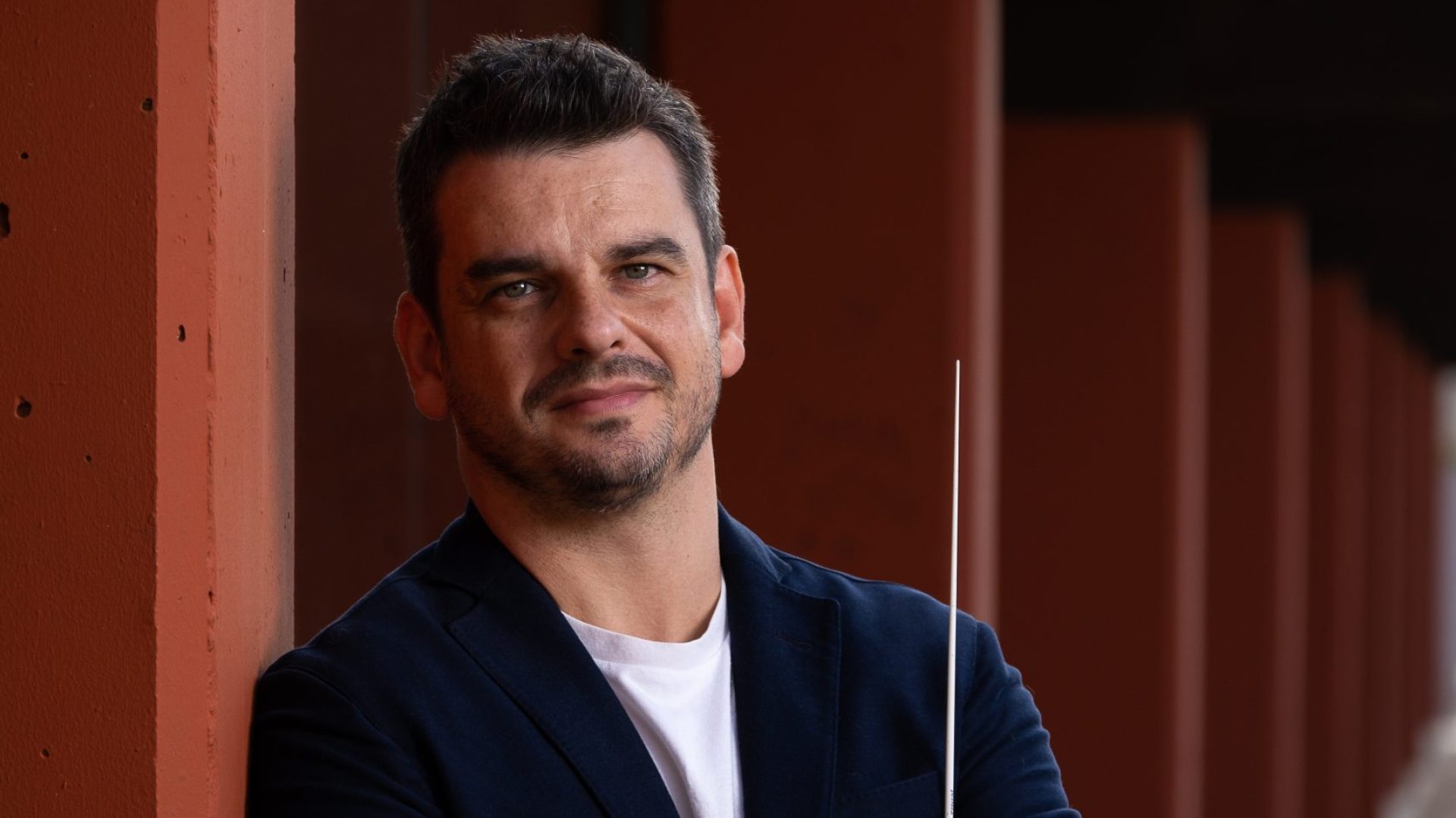

In Malmö, the group from Malaga becomes the first Spanish band of its kind to achieve the title of runner-up in the European Brass Band Championship.
“It has been incredible, unsuspected.” It is the first thing that Víctor Eloy López says on the other end of the phone, still trying to assimilate what five years ago seemed unattainable. The Málaga Brass Band that he founded in 2015 and that he directs won this weekend in Malmö (Sweden) with the title of European runner-up in the European Brass Band Championship, something like the UEFA of brass. Never has a Spanish group gone so far in this competition. What’s more, Spain has only been represented twice in this world league: in 2019 and now, in both cases with the Málaga Brass Band.

The band, made up of professionals from Malaga or trained in Malaga, thus imposes itself in a musical field foreign to Spanish tradition alongside European groups with a long history behind them. This contest, in fact, has completed 44 editions, not counting the two blank years due to the pandemic. And it is not easy to access it.
Málaga Brass Band is the only band in the country adapted to the British style, the predominant one in this discipline, very different from the usual brass ensemble that is studied in conservatories. There are no trumpets here, but English cornets; and instead of horns the alto horns are played. “We have been buying them second-hand from bands from all over Europe with what we were earning from concerts,” says its director.
That’s why the jury, who chooses the winners blindly, just listening to the performance, were surprised to discover that it was “the Spaniards” who had interpreted ‘Terra Australis’ by the English composer Martin Ellerby with that precision. It is the result of two intense months of rehearsals, “from 10 to two in the morning almost every day.” During this time, they have had the support of the Center for Art and Modern Music of Europe (CAMM), the Alhaurín de la Torre Municipal School of Music and Dance (EMMDAT) and the Málaga Musical Foundation.
But this is an expensive world and they face it with what they get from their performances. The trip to Malmö alone for the 32 musicians that make up the Málaga Brass Band has cost around 10,000 euros and looking for the most economical options. “We have been saving for four years to pay for it,” points out Víctor Eloy López. The second prize, worth 3,500 euros, has slightly alleviated the cost, but is completely insufficient: “Next year the competition is in Palanga (Lithuania), but we don’t know if we will be able to go because we don’t have the financial means.”
They do it out of pure vocation, combining it with their other professional commitments. The director from Malaga, in fact, is a Professor at the Superior Conservatory of Music of Malaga and raises the baton in front of professional orchestras inside and outside the borders. Last month he conducted a lyrical gala at the Liceo de Barcelona and was assistant teacher for Deutsche Grammophon in a recording by mezzo-soprano Elina Garança and the Gran Canaria Philharmonic Orchestra. At the end of June he will reunite with the Malaga Philharmonic Orchestra, and will travel as guest conductor to Poland and Romania.